
Parmar, Tanvi (IND),
Inner Seijaku: A Pause That Moves
Winner of the awagami award for handmade paper sponsored by the awagami factory value $500
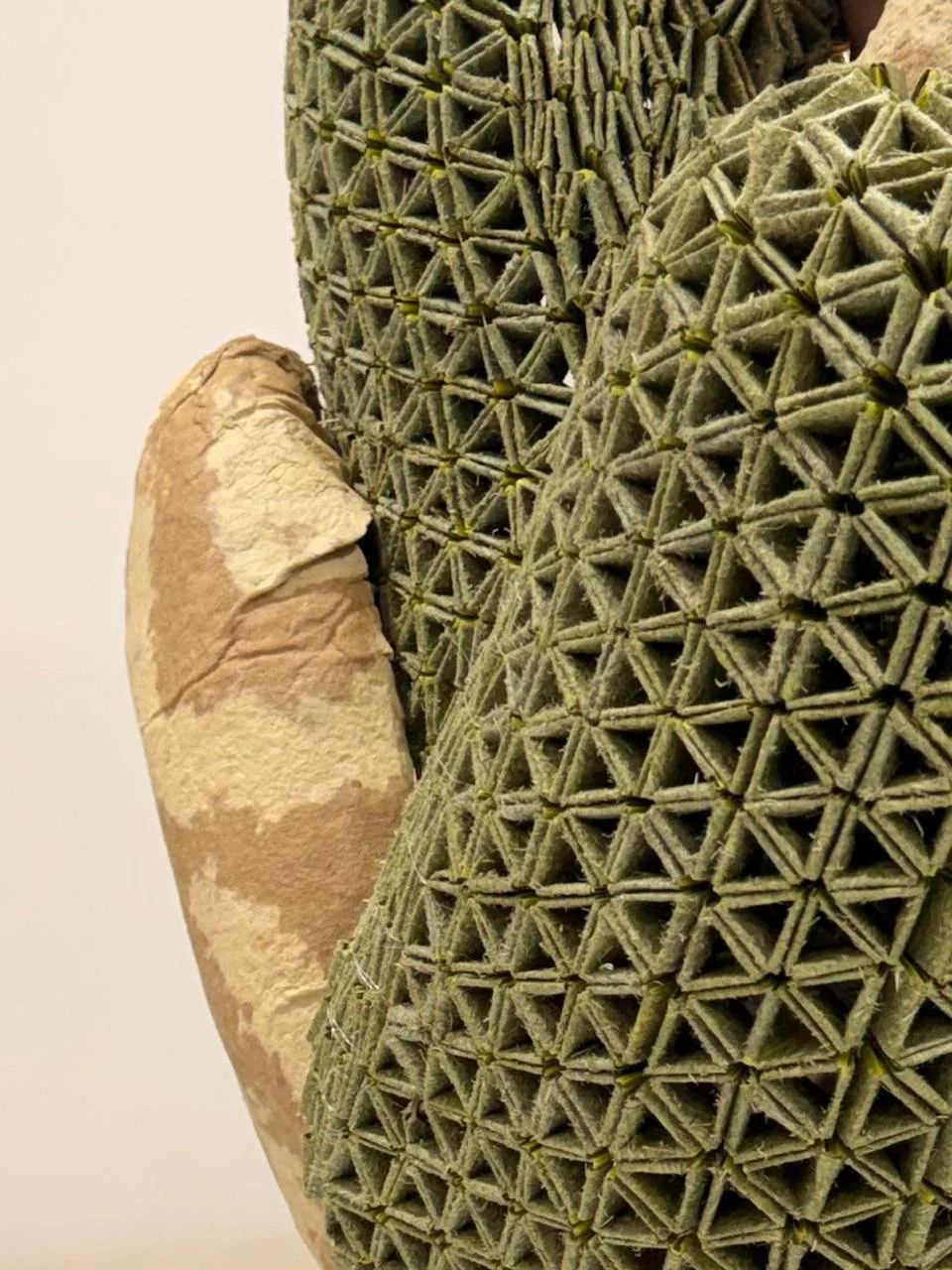
Inner Seijaku: A Pause That Moves
'Inner Seijaku – A Pause That Moves' is about the self-healing journey of the creator, navigating loss through creation, where the pause becomes a quiet yet active journey inward.
ARTIST STATEMENT
tanvi parmar
My creative practice is strongly driven by form and structure. I am drawn to geometry, construction and techniques that allow material to transform into something unexpected.
I enjoy challenging materials through experimentation and refining my process until the work feels resolved and complete.
My creative process does not begin with trends, but with introspection. I turn inward towards my life journey, personal reflections, and lived experiences, allowing them to shape what I create. For me, creativity is a way of witnessing emotions and translating them into fragile forms.
A creation born from nothingness often creates a space to pause, a moment to reflect.
This is the art of Karesansui, a dry landscape. This art form is filled with principles and symbols that hold deep meaning. This artistic expression caught my attention …the inspiration of Karesansui led me to create Inner Seijaku: A Pause That Moves.
My own paper is a feature of the design. Grass-based handmade paper became central to the process. Its organic texture and variability enabled multiple explorations and material learnings.
Oval Snapology structures were developed using gateway paper, allowing the integration of grass paper without adhesives. This technique relied entirely on folding as a structural system.
Mold & Cast elements: An Egg-shaped mold was developed with a putty finish, followed by a POP cast, inspired by slip-casting techniques to achieve a seamless paper form.
My explorations extended into marbled paper using newspaper, craft paper, and coffee pigment, which was later adapted onto the egg-shaped mold to retain its form during drying.
Surface textures were explored using oil and papier-mâché, incorporating a pinching technique to create tactile irregularities and depth.