
Fitzhenry, Katie (UK),
Shifu of Seamlessness and Grounds
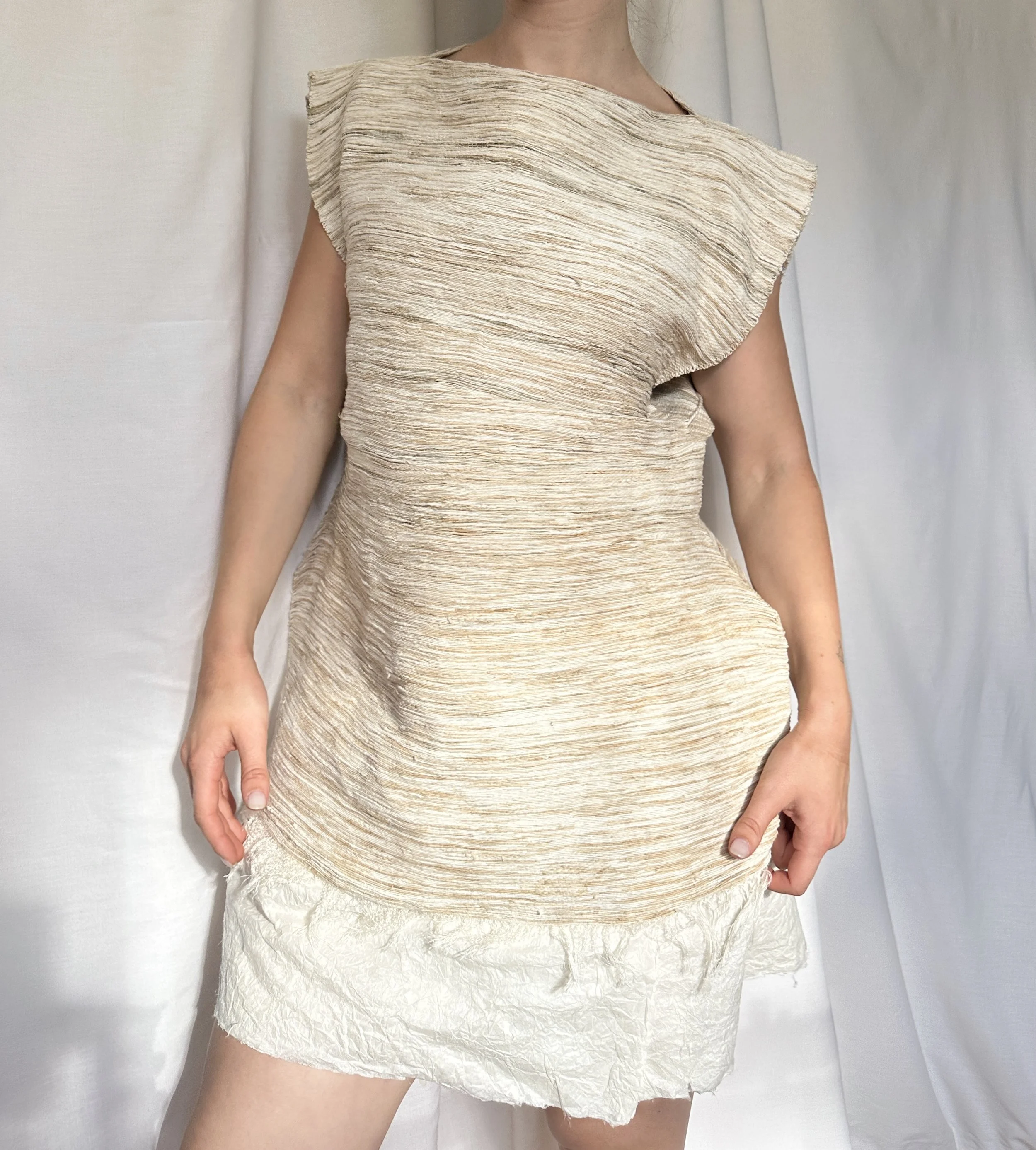
Shifu of Seamlessness and Grounds
The concept of this design stems from the desire to be a part of the revival of the endangered traditional japanese tecnique of Shifu paper-weaving in the contemporary world.
ARTIST STATEMENT
katie Fitzhenry
My practice is shaped by an interdisciplinary background in chemistry, textiles, and Japanese, which informs the artistic, scientific, and cultural perspectives that underpin my work.
Sustainability, circularity, and environmental responsibility sit at the core of my design approach. I am particularly interested in the utilization of waste materials, and the potential for organic waste to be introduced into material design. Part of my work explores how waste materials can be incorporated into paper-making processes, transforming discarded resources into new materials while questioning conventional ideas of value and material hierarchy.
For my most recent project, I developed a speculative collection of paper-based textile materials designed for autumn/winter fashion applications. The collection demonstrates the versatility, strength, and tactile richness of paper as a wearable material, challenging preconceptions of fragility and disposability. The materials propose speculative fashion applications that challenge perceptions of paper, emphasize its potential within contemporary sustainable textile design, and support the revival and modern reinterpretation of heritage craft practices.
Central to this work is the integration of mycelium growth with traditional paper textiles. Organic waste is incorporated into the paper-making and spinning processes to support mycelial growth, allowing the material to become reinforced by this emerging biomaterial. Mycelium offers exciting possibilities for the future of fashion due to its regenerative properties and low environmental impact. Drawing on my background in chemistry, I investigate the scientific processes behind mycelial growth and its interaction with paper yarn and woven structures, bridging craft knowledge with scientific experimentation.
As a textile designer, my practice centers on material development and innovation through experimentation with structure, texture, and weave. Using traditional Shifu and Kamiko processes as a starting point, I explore how heritage techniques can evolve within contemporary contexts and how endangered craft practices can be revitalized through modern technologies. I am particularly interested in the relationship between cultural heritage and innovation, and how these seemingly contrasting approaches can coexist to support more regenerative, mindful, and future-focused approaches to fashion material design.